 (613) 454-1577
 Request Service



How To Lower Your Appliance Energy Costs During Ontario Peak Hydro Hours
Opening your monthly hydro bill during the peak of an Ottawa summer or the depths of a freezing winter is always a stressful experience. With inflation affecting every part of our daily lives, finding ways to cut household expenses is a top priority for families. You might feel like you have no control over the rates set by the province, but you actually have complete control over how your home consumes that electricity.
Every time you turn on the oven or run a load of laundry, you are pulling massive amounts of wattage from the grid. If you are doing this at the wrong time of day, or if your machines are dirty and poorly maintained, you are literally throwing money away. We want to show you exactly how to lower appliance energy costs Ontario residents face every single month.
By understanding the provincial billing structure and making tiny adjustments to how you use each specific machine in your house, you can see immediate savings. Let us break down the pricing models, identify the biggest energy hogs in your home, and provide a room-by-room guide to slashing your utility bills without sacrificing your comfort.
Understanding Hydro Ottawa Time Of Use Rates
Before you can save money, you must understand how you are being charged. Most homes in the capital region operate on a Time of Use pricing model. This means the price you pay for electricity changes depending on the time of day and the day of the week. The provincial grid charges more when demand is high and significantly less when demand drops.
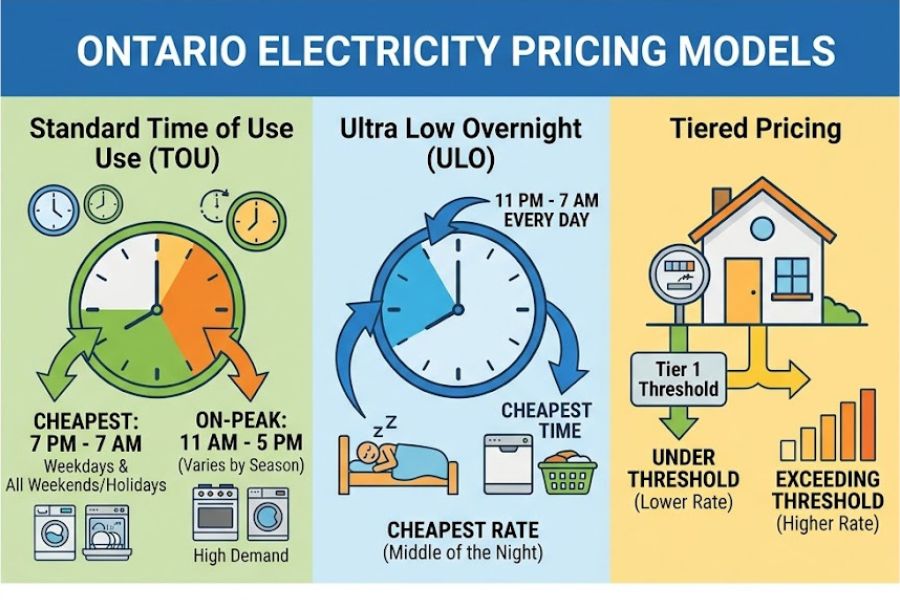
Recently, the province also introduced an Ultra Low Overnight plan. This is a game-changer for people who are willing to shift their heavy appliance usage to the middle of the night. Choosing the right plan and scheduling your chores accordingly is the easiest way to reduce your hydro bill in Ottawa immediately. You can review the official Ontario Energy Board electricity rates to see which billing structure works best for your family's lifestyle.
What Time Of Day Is Electricity Cheapest In Ontario
If you want to know what time of day is cheapest for electricity in Ontario, the answer depends on your chosen billing plan. Under the standard Time of Use model, electricity is always cheapest between seven in the evening and seven in the morning on weekdays, and all day long on weekends and statutory holidays. If you opt for the new Ultra Low Overnight plan, the absolute cheapest time to run your machines is between eleven at night and seven in the morning every single day.
Comparing Ontario Hydro Pricing Models
| Pricing Plan | Most Expensive Time (Peak) | Cheapest Time (Off-Peak) |
|---|---|---|
| Standard Time of Use | Midday or late afternoon (varies by season) | 7:00 PM to 7:00 AM & All Weekends |
| Ultra Low Overnight | 4:00 PM to 9:00 PM (Every weekday) | 11:00 PM to 7:00 AM (Every single day) |
| Tiered Pricing | Exceeding your monthly kilowatt allowance | Staying under the monthly threshold |
The Refrigerator: The 24 Hour Energy Vampire
Your refrigerator is unique because you cannot simply turn it off during On-Peak hours. It runs twenty-four hours a day, seven days a week. Because it never stops, it is typically the second largest consumer of electricity in your entire home, right behind your heating and cooling system. Keeping this unit running efficiently is absolutely mandatory if you want to save money.
When a fridge struggles to cool, the compressor motor runs continuously instead of cycling on and off. This constant running draws maximum amperage. A common cause of this struggle is a torn rubber door gasket that leaks heavy, cold air onto your kitchen floor. If you notice your motor never takes a break, having refrigerator repair experts replace your door seals will instantly drop your daily power consumption.
Checklist For A Highly Efficient Fridge
- Keep the internal temperature dial set precisely between three and four degrees Celsius.
- Pull the unit away from the wall twice a year and vacuum the dusty condenser coils.
- Never put steaming hot leftovers directly inside; let them cool on the counter first.
- Keep the freezer at least three-quarters full to retain solid thermal mass.
- Ensure the top of the fridge is clear of clutter so internal heat can safely dissipate.

The Clothes Dryer - Reducing Massive Amperage Draws
Of all the appliances that use the most electricity in your house, the electric clothes dryer is the undisputed champion. It uses a massive two hundred and forty volt heating element to bake the moisture out of your heavy Ottawa winter gear. Running this machine at five in the afternoon on a weekday is one of the most expensive chores you can possibly do.
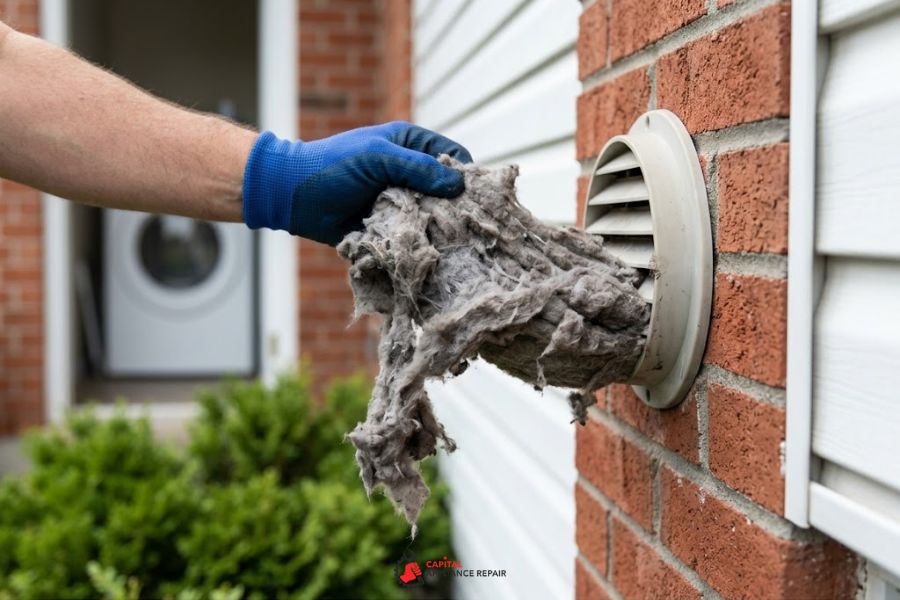
You must shift your laundry schedule to the weekends or late evenings. Furthermore, if your exhaust vent is clogged with lint, the hot, wet air cannot escape the drum. This forces a normal forty-five-minute cycle to drag on for two agonizing hours, doubling your hydro cost. If your clothes are constantly coming out damp, booking professional dryer repair in Ottawa to clear the internal blower wheel and check the heating element is a brilliant financial investment.
Quick Dryer Efficiency Hacks
- Clean the lint trap screen before every single load without exception.
- Throw a dry bath towel into the drum with wet clothes to speed up moisture absorption.
- Use natural wool dryer balls instead of chemical dryer sheets to increase airflow.
- Never run a cycle for just one or two shirts; always wait for a full load.
The Washing Machine: Washing Cold And Washing Full
Your washing machine uses a surprising amount of electricity, but the motor that spins the drum is only half the problem. Up to ninety percent of the energy consumed during a hot wash cycle goes entirely toward heating the water inside the drum. Modern laundry detergents are scientifically formulated to dissolve dirt and lift stains perfectly in cold water.
By simply twisting your dial from hot to cold, you instantly eliminate the massive energy draw required by your hot water tank. You should also ensure you are running appropriately sized loads. If your machine is violently shaking because you overloaded it with heavy blankets, you might need a washing machine repair technician to replace the suspension rods. A balanced, cold water load is the ultimate hydro saving combination.
The Dishwasher: Smart Habits For Kitchen Cleanup
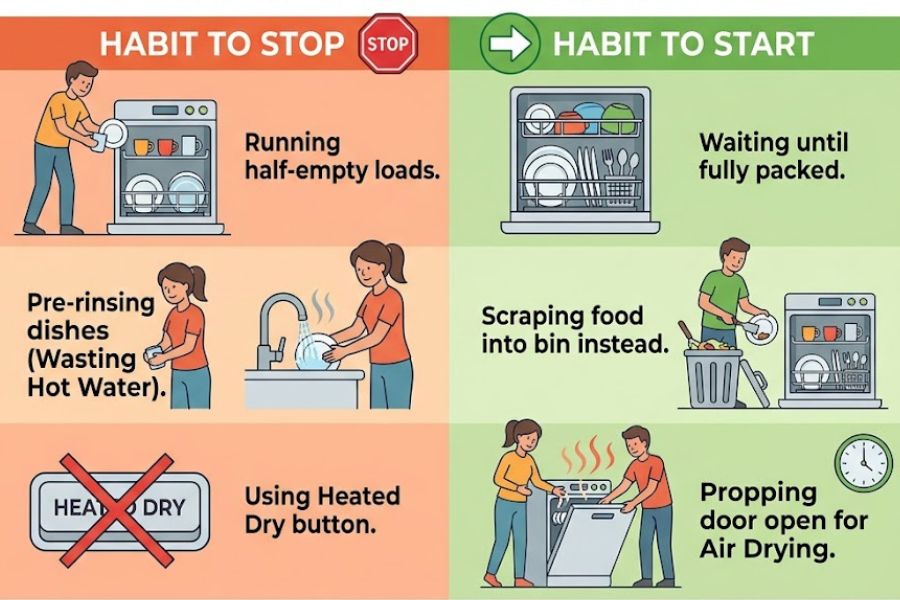
The dishwasher is actually much more energy efficient than hand washing your dishes in the sink, provided you use it correctly. Hand washing requires gallons of continuous hot water from your tank, whereas a modern dishwasher recycles a few gallons internally. However, the drying phase of the cycle is where Ottawa homeowners waste the most money.
Most modern units feature a Heated Dry option that uses an exposed metal element at the bottom of the tub to literally bake the dishes dry. This draws immense power. Simply disabling this setting and opening the door a few inches when the wash is done allows the dishes to air dry naturally, cutting the cycle's energy consumption in half. If your dishes are coming out covered in food particles anyway, you should seek affordable dishwasher repair to clean the internal spray arms rather than running the load a second time.
Dishwasher Money Saving Rules
| Habit To Stop | Habit To Start | Financial Impact |
|---|---|---|
| Running half-empty loads | Waiting until the racks are fully packed | Cuts weekly water and hydro usage by 50% |
| Pre-rinsing dishes in the sink | Scraping food into the garbage bin instead | Saves gallons of expensive hot water tank heating |
| Using the Heated Dry button | Propping the door open for overnight air drying | Eliminates the highest wattage draw of the cycle |
The Oven: Retaining Heat And Cooking Efficiently
An electric oven uses massive high-voltage elements to reach baking temperatures. Every time you open the heavy glass door to check on a roasting turkey, the internal temperature immediately drops by up to twenty-five degrees. The oven must then draw maximum electrical amperage to quickly reheat that lost space. Stop opening the door and start trusting your internal oven light and the glass window.
You can also maximize your energy usage by batch cooking. If you are heating the oven to four hundred degrees anyway, try to bake your chicken, roast your vegetables, and prep a casserole all at the same time. If your unit is struggling to reach the correct temperature no matter what you do, you likely need local oven repair services to test the bake element or recalibrate the internal temperature sensor.
How Can I Lower My Hydro Bill In Ontario Long Term
When Ottawa residents ask how they can lower their hydro bill in Ontario, they usually want a magic trick. The reality is that long-term savings come from consistent, minor habit changes and proactive home maintenance. You must align your heaviest chores with the off-peak hours of your specific billing plan. You must also treat your kitchen and laundry machines like the heavy-duty mechanical engines they are.
A dirty, clogged, or broken machine will always use more electricity than a clean, well-oiled one. An air conditioner with a blocked filter or a dryer with a snapped belt wastes power while failing to do its job. If you notice any of your units making strange noises, leaking water, or struggling to complete a cycle, do not ignore them. Running broken machinery is a guaranteed way to inflate your monthly utility costs.
Professional Maintenance Keeps Appliance Energy Costs Down
The most effective way to ensure your home runs efficiently is to keep your equipment in peak condition. You do not need to buy brand-new, expensive Energy Star models to see savings. You simply need to take care of the machines you already own. A simple professional tune-up can restore factory-level efficiency to a ten-year-old appliance.
Whether you need a new rubber seal to keep your fridge cold, a thorough vent cleaning to speed up your dryer, or general troubleshooting across your home, we are here to help. Contact our Ottawa appliance repair team today. We will help you identify the hidden energy vampires in your home, repair the broken components safely, and get your monthly hydro bills back under control.


