 (613) 454-1577
 Request Service




What To Know Before Installing A New Built-In Dishwasher
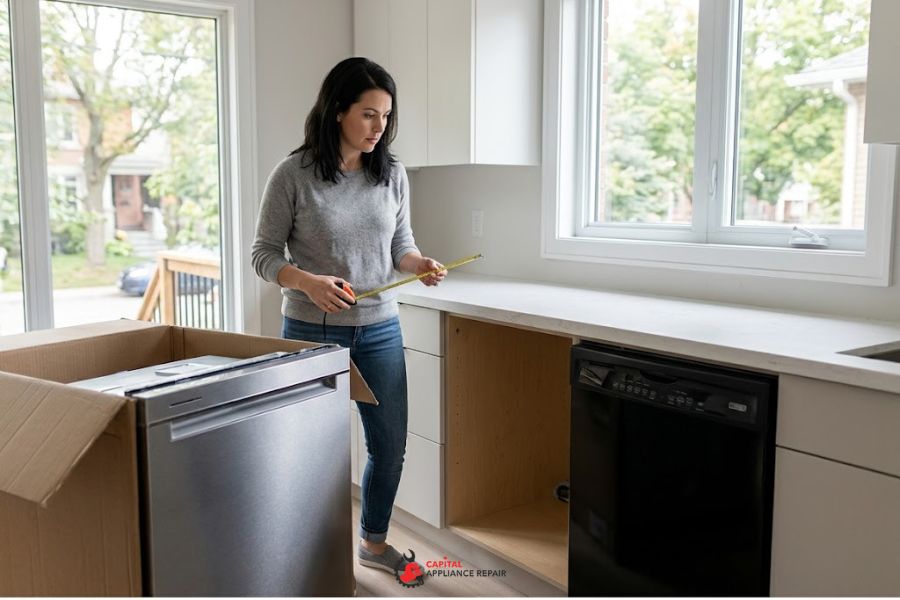
Upgrading your kitchen with a brand new appliance is incredibly exciting. However, pulling the old unit out and sliding the new one in is rarely as simple as the manufacturer makes it look. If you are preparing to install a built-in dishwasher in your Ottawa home, you need to understand the structural, plumbing, and electrical realities hiding under your counter.
Attempting a DIY installation without knowing the modern 2026 building codes can lead to absolute disaster. Here are the three biggest risks of an improper installation setup:
- Catastrophic Water Leaks: Slow drips from old copper lines will rot your subfloor and destroy your basement ceiling.
- Electrical Shorts: Improperly converting a hardwired line to a standard plug can spark a hidden cabinet fire.
- Voided Warranties: Most premium appliance brands will instantly void your warranty if the unit is not perfectly leveled or lacks a high-loop drain.
Before you purchase that sleek new stainless steel tub, let us walk through the exact dishwasher installation requirements you need to check in your kitchen today.
Do You Actually Need A New Built-In Dishwasher?
Before you pull out your tape measure and head to a local Ottawa appliance store, take a moment to evaluate your current machine. Many homeowners prematurely replace their dishwashers because the unit stops draining, leaves dishes dirty, or completely loses power. In reality, these are often incredibly simple and inexpensive fixes.
A dishwasher that refuses to drain is usually just suffering from a clogged sink baffle or a jammed drain pump, not a dead motor. A unit that will not turn on might just have a blown thermal fuse hidden in the door panel. Our expert technicians provide fast and affordable Ottawa dishwasher repair to save you from buying a machine you do not actually need.
Repair Vs. Replace: Quick Diagnostic Guide
| The Problem | The Likely Cause | Action To Take |
|---|---|---|
| Dishes are coming out dirty | Clogged spray arms or a dirty internal filter | Repair: A simple cleaning usually restores 100% function. |
| Standing water in the tub | Jammed drain pump or blocked sink baffle | Repair: Cheap and fast to clear out the debris. |
| Loud metallic grinding | Shattered wash motor bearings | Replace: If the unit is over 8 years old, buy a new one. |
Measuring Your Space And Avoiding The Trapped Dishwasher
You cannot just assume a standard twenty-four-inch unit will fit perfectly into your existing cabinet cutout. Homes in older Ottawa neighborhoods, like the Glebe or Westboro, often feature layers of kitchen renovations. The most common nightmare our technicians face is the trapped dishwasher.
This happens when a previous homeowner installed thick hardwood or vinyl flooring directly over old linoleum. This raises the floor level directly in front of the appliance, effectively locking the old unit under the granite countertop.
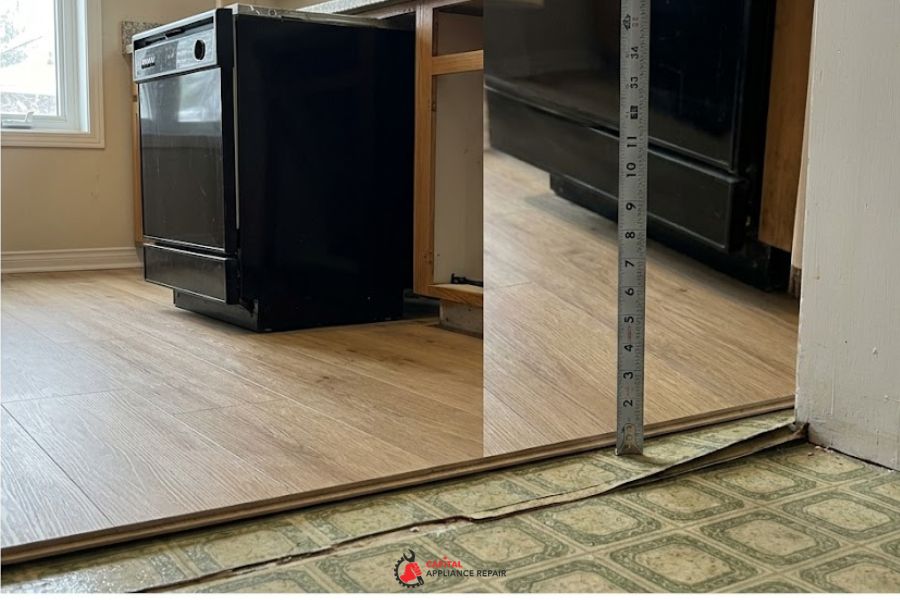
Pre-Installation Measurement Checklist
- Measure The True Height: Measure from the lowest point of the new floor to the underside of the countertop. You need at least thirty-four inches of clearance.
- Check the Depth: Modern units have thicker doors packed with acoustic insulation. Ensure the new depth will not block your kitchen drawers from opening.
- Locate the Routing Holes: Check the side walls of your wooden cabinets to ensure the holes are large enough to pass the new, thicker electrical plug and water lines through.
Understanding Dishwasher Sizing Guidelines
| Dishwasher Type | Standard Dimensions | Best Used For |
|---|---|---|
| Standard Built-In | 24" Wide x 34" High | Standard modern kitchens with normal counter heights. |
| ADA Compliant | 24" Wide x 32" High | Older homes with layered floors block the height. |
| Slimline Models | 18" Wide x 34" High | Tight condo kitchens or basement bar setups. |
Plumbing Requirements: Upgrading For Safety
Plumbing standards have changed drastically over the last decade. Many homes built in the nineteen-eighties and nineties used rigid copper pipes connected directly to the appliance water inlet. Modern best practices require entirely different materials to prevent unexpected flooding.
You also have to factor in your local water source. If you live in rural Ottawa areas like Manotick or Carp on a well system, you must understand how hard water damages dishwasher internal pumps. Adding an inline water softener during installation is a massive money saver.
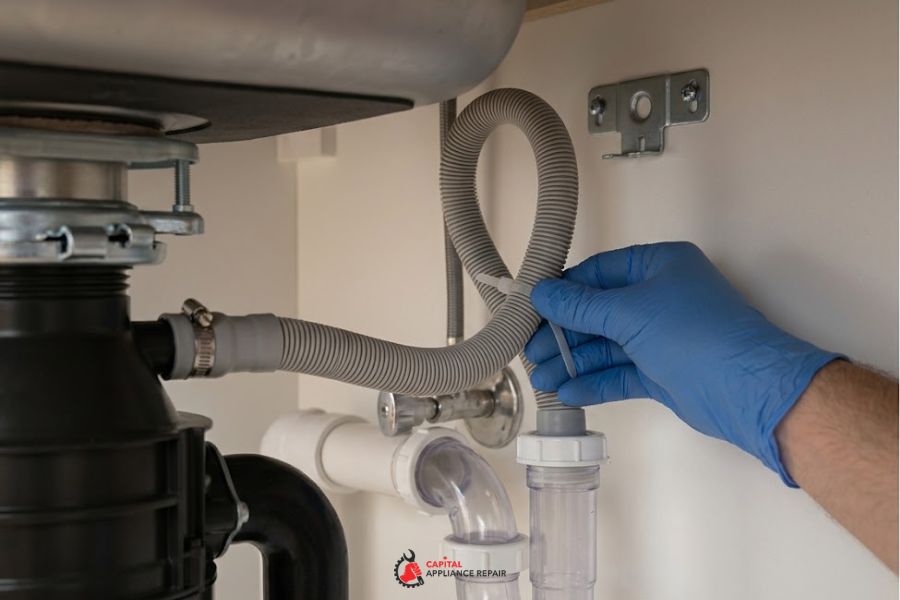
Comparing Old Plumbing To Modern Standards
| Plumbing Component | The Old Risky Standard | The 2026 Safe Requirement |
|---|---|---|
| Water Supply Line | Rigid copper pipe that snaps when the machine is moved | Flexible braided stainless-steel hose that absorbs vibrations |
| Shut Off Valve | Located in the basement or hidden behind the unit itself | Easily accessible quarter-turn valve under the kitchen sink |
| Drainage Setup | Hose lying flat on the floor connecting to the sink plumbing | A mandatory High-Loop is secured near the top of the sink base |
The High-Loop requirement mentioned in the table is absolutely critical. Without elevating the drain hose above the sink drain, dirty sink water will naturally backwash into your clean appliance. This pooling of greywater is exactly why your dishwasher smells like a sewer after a bad DIY installation.
Electrical Requirements: Hardwired Vs. Plug-In
You cannot just splice wires together with electrical tape and shove the machine into the wall. The transition from older machines to modern smart appliances has created a major electrical hurdle for Ottawa homeowners.
- The Hardwired Past: Older units had the bare copper house wires connected directly to a terminal box underneath the tub.
- The Plug-In Present: Most modern premium brands like Bosch and Miele now come with a standard 120-volt wall plug.
- The Electrical Upgrade: You will likely need to install a new grounded junction box or an under-sink wall outlet to safely power the new unit.
Does a dishwasher need to be hardwired today? No, but the electrical conversion must be handled safely. The Electrical Safety Authority of Ontario strictly mandates that major appliances run on a dedicated fifteen-amp circuit to prevent overloaded breakers and hidden wall fires.
Leveling And Acoustic Insulation For Dishwasher Service
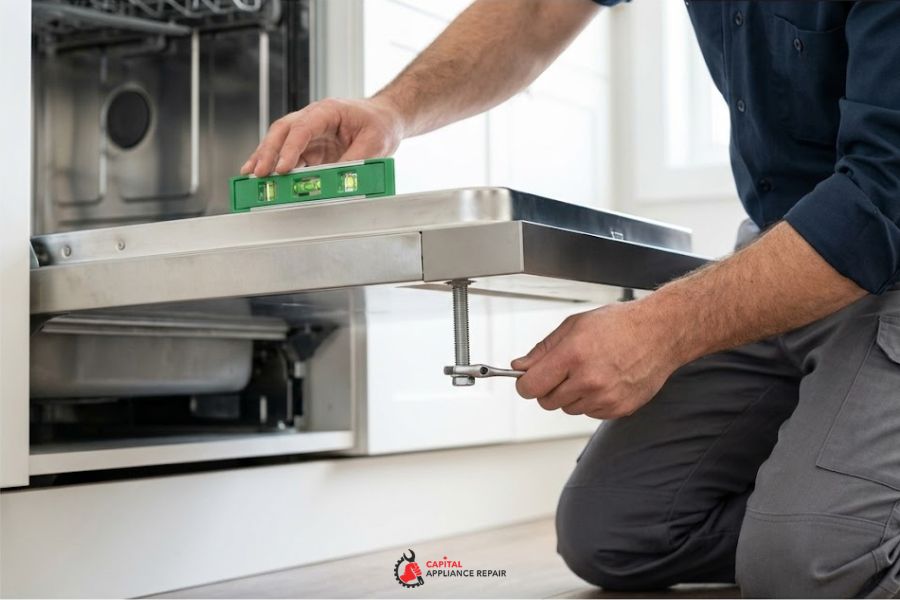
Once the plumbing and electrical connections are perfect, you must focus on the physical placement. Modern units are incredibly quiet, but only if they are installed perfectly level. If the tub sits unevenly on your kitchen floor, the wash pump will rattle violently against the wooden cabinetry.
Properly adjusting the feet prevents loud mechanical grinding, a topic we cover extensively in our guide to understanding dishwasher noise. Follow these exact steps to secure the machine:
Step-By-Step Leveling Guide
- Push the unit halfway into the cabinet cutout.
- Place a bubble level on the top lip of the open door to check left-to-right leveling.
- Place the level against the inside vertical tub wall to check front-to-back leveling.
- Use a wrench to adjust the four threaded steel legs until the bubble sits perfectly centered.
- Drive the top mounting brackets directly into the underside of the countertop to lock it in place.
Why You Should Hire An Appliance Installation Professional
The biggest challenge of installing a new kitchen unit is that it requires three entirely different skill sets. A standard plumber will not touch the high-voltage wiring, and an electrician will not connect the braided water lines. You are left trying to coordinate multiple expensive tradesmen just to wash your dishes.
This is exactly why you need an all-in-one solution. We provide complete appliance services for the entire Ottawa region. Our technicians are fully trained to handle the braided steel plumbing, the safe electrical conversions, and the precision leveling required for premium brands.
Do not risk your custom kitchen cabinets or your hardwood floors with a bad DIY attempt. Let our team handle your Ottawa dishwasher installation safely and correctly the first time. We will remove your old trapped unit, upgrade your plumbing connections, and ensure your new machine runs silently and leak-free for years to come.


