 (613) 454-1577
 Request Service




How To Clear A Blocked Drain Pump In A Front Load Washer
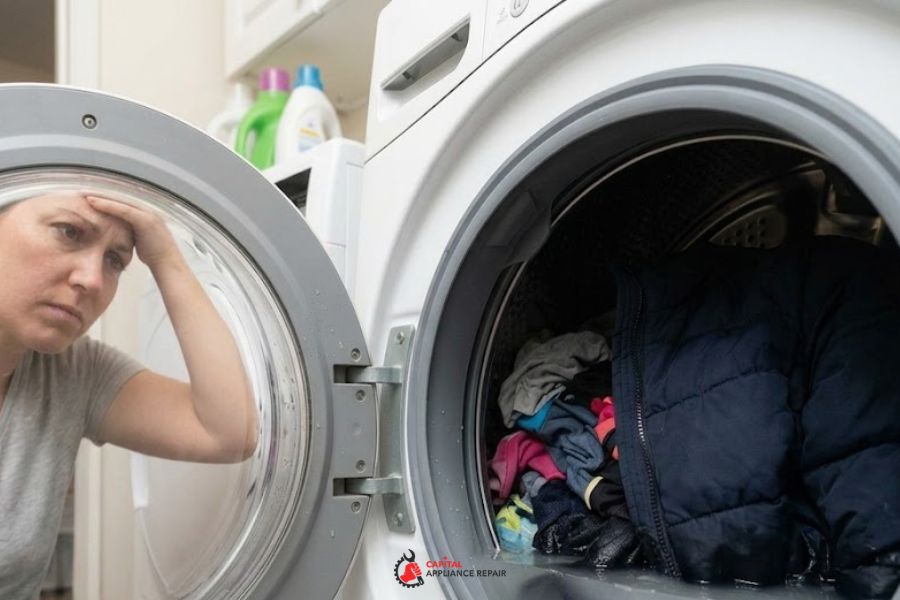
Opening a washing machine door only to discover your freshly washed clothes swimming in a pool of dirty water is a household nightmare. This frustrating scenario usually points directly to a blocked drain pump. When the water cannot escape the drum, the machine will completely halt its cycle, leaving you with heavy, soaking wet laundry. For many families in our region, dealing with a blocked drain pump in a front-load washer is a common occurrence, especially after a long winter of washing heavy outerwear.
If your machine is struggling to push water out of the drum, it will also struggle to spin properly. This retained water weight is actually a leading cause of severe drum imbalance and vibration. A machine full of water simply cannot balance itself to reach those high extraction speeds.
Recognizing The Signs Of A Blocked Drain Pump
Your washing machine will usually give you several warning signs before it completely stops draining. You might notice that the cycles are taking much longer than usual to complete. You may also hear a strange gurgling or loud humming noise coming from the bottom of the cabinet when the machine is supposed to be emptying. Often, the digital display will flash a specific error code indicating a drainage timeout or a water level fault.
When a washer fails to drain efficiently, your clothes come out absolutely saturated. Throwing these dripping wet items into your drying machine puts massive strain on the heating element and the drum belt. This cascading failure is exactly why your washer won't drain. Fixing the washer drain issue immediately is the only way to protect your other expensive laundry appliances from premature wear and tear.
Why Ottawa Winter Gear Causes Massive Clogs
Why do these pumps fail so frequently in our local area? Ottawa winters require heavy, rugged gear. Families throw thick parkas, slushy snow pants, and durable hiking jackets into the wash every single week. These heavy items carry hidden hazards that standard cotton shirts simply do not. Pockets are often completely forgotten before the clothes are loaded into the drum.
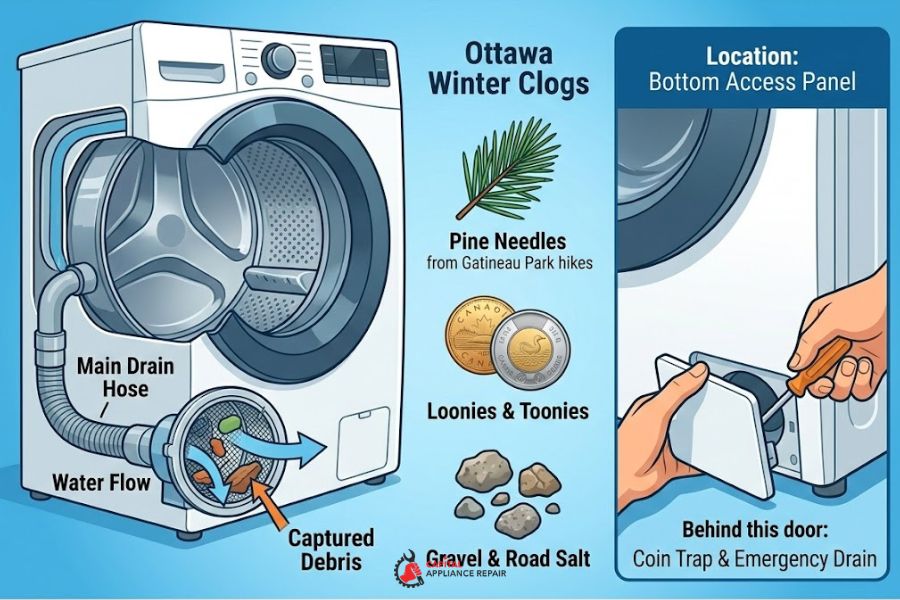
These pockets are frequently filled with thick pine needles from local Gatineau Park hikes, heavy Canadian coins like Loonies and Toonies, and abrasive gravel mixed with calcium chloride road salt. When these hard, heavy items wash out of your pockets during the tumbling action, they bypass the tiny drainage holes in the stainless steel drum. They shoot straight down the rubber tube hose and directly into the primary drainage system.
Before you panic and assume the appliance is completely broken, you should know that modern washing machines are equipped with built-in safeguards to catch debris. To understand how these machines are engineered to handle water flow, you can read The Spruce guide on washing machine maintenance. They explain how regular filter checks and proper loading habits can prevent catastrophic plumbing backups in your laundry room. Let us walk through exactly how to locate the blockage and safely drain your appliance.
The Items Hiding Inside Your Pockets
| Debris Type | How It Enters The Machine | Impact On The Drain Pump |
|---|---|---|
| Coins And Keys | Forgotten in winter jacket pockets | Creates a hard physical blockage in the filter housing |
| Gravel And Salt | Stuck to the cuffs of heavy snow pants | Acts like sandpaper against the plastic impeller blades |
| Pet Hair And Lint | Washed off heavy blankets and sweaters | Forms a thick, sludgy wall that stops water flow entirely |
Locating The Coin Trap Filter
Most modern front-load units are designed with user maintenance in mind. Unlike older top-loading machines that required you to take the entire metal cabinet apart just to reach the motor, a front loader usually features a convenient access point. This small trap is specifically engineered to catch rogue items before they can reach the delicate electrical components of the pump.
You will typically find this small square or rectangular panel at the bottom right or left corner of the front of the machine. It is usually located just below the main door. Behind this small plastic door sits the drain pump filter, commonly referred to by technicians as the coin trap. Opening this panel is the very first step in clearing a blocked drain pump and restoring your machine to working order.
Finding The Bottom Access Panel
- Look at the lowest section of the front metal cabinet for a small cutout.
- Use a flathead screwdriver or a sturdy coin to gently pry the plastic door open.
- Inspect the area inside for a round plastic dial and a small rubber tube.
- Place a thick towel on the floor directly beneath this access panel.
- Do not unscrew the large round dial immediately or water will rush out.
Tools Needed For A Safe Cleanup
You do not need an extensive toolkit to clear this filter, but preparation is key. But, you will need a shallow baking dish with very low edges to catch the water. You should also grab several highly absorbent bath towels to protect your flooring. A pair of needle-nose pliers can be incredibly helpful for pulling out tightly wedged debris like bobby pins or rusted screws. Finally, having a small flashlight on hand will allow you to see deep into the pump housing once the filter is removed.
Safely Draining The Water Without Flooding The Floor
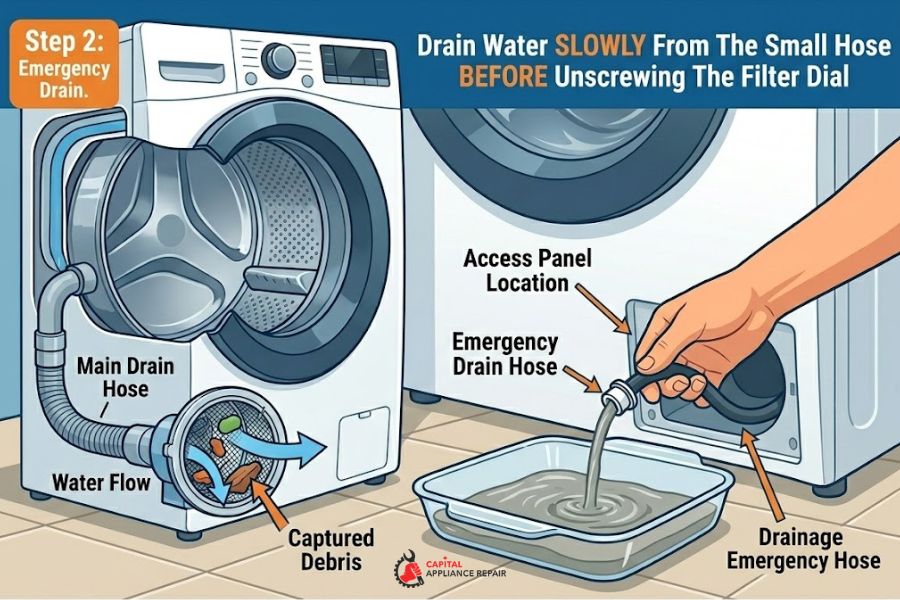
If you are staring at a drum full of standing water and wondering how to manually drain a front-load washer, you must proceed with extreme caution. The biggest mistake homeowners make is grabbing the large round filter dial and twisting it counterclockwise right away. If the drum is full of water, unscrewing that filter will release several gallons of dirty water onto your laundry room floor in a matter of seconds.
Next to the round filter dial behind that bottom access door, you will see a small rubber tube with a plastic plug at the end. This is the emergency drain hose. You need to pull this hose out gently, remove the plug, and let the water flow slowly into your shallow baking dish. When the dish gets full, put the plug back in, empty the dish into a sink, and repeat the process until no more water comes out of the small hose.
How Do I Manually Drain a Front-Load Washer
Front-load machines use significantly less water than older agitator models, but they still hold a substantial volume during the main wash and rinse cycles. You can learn more about high-efficiency water levels by visiting the Energy Star clothes washer specifications. Because they still hold several gallons, using the emergency drain hose is absolutely mandatory. This slow manual draining process ensures that your home is protected from unexpected water damage.
Using The Emergency Drain Hose Correctly
| Step Number | Action Required | Why This Is Important |
|---|---|---|
| Step One | Unplug the washing machine from the wall | Eliminates the risk of severe electrical shock |
| Step Two | Pull the small emergency tube and remove the plug | Allows controlled drainage into a shallow dish |
| Step Three | Slowly unscrew the large main filter dial | Releases the trapped debris and coins |
Removing And Cleaning The Filter Assembly
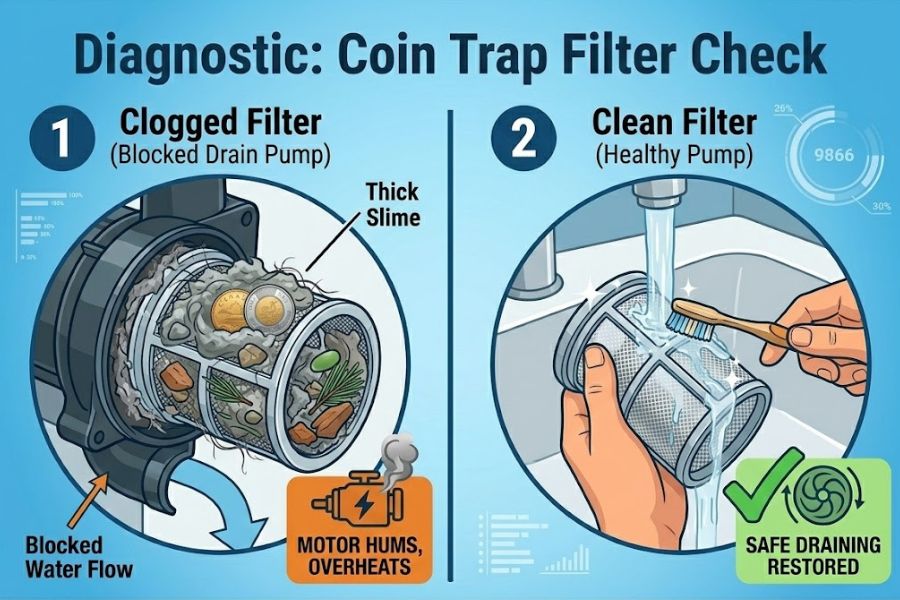
Once the water is completely drained through the small hose, you can safely unscrew the large coin trap dial. Pull the cylindrical plastic filter straight out. You will likely find a disgusting mix of hair, lint, coins, and slime. Wash this plastic component thoroughly in your kitchen sink using warm water and an old toothbrush. Before you put it back in, shine your flashlight inside the hole in the washing machine to ensure no gravel or debris is hiding in the very back near the motor blades.
What To Do When The Pump Motor Burns Out
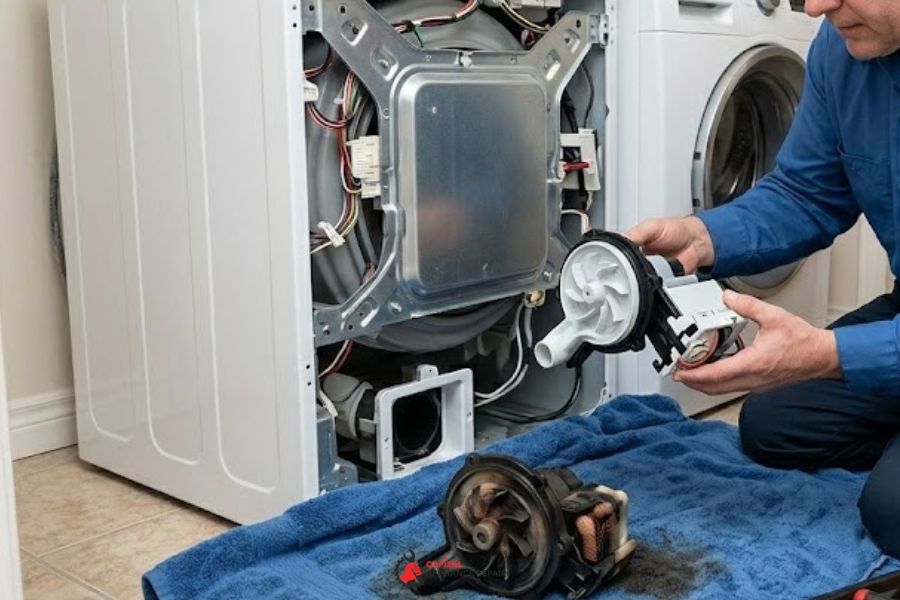
Sometimes you successfully drain the water and clean the filter perfectly, but the machine still refuses to pump when you restart the cycle. This indicates a more serious mechanical failure. A hard piece of debris, like a sharp piece of gravel or a strong bobby pin, can slip past the filter mesh and physically jam the plastic spinning blades of the motor. If clearing the filter doesn't work, the impeller may be broken. Call us for reliable Maytag washer repair or service for any other heavy-duty brand you own.
When the impeller is physically jammed by an object, the main electronic control board continues to send electrical voltage to the pump motor to force it to spin. Because the motor is locked in place by the debris, it cannot turn freely. This causes the electrical windings inside the motor to hum loudly, overheat, and eventually burn out completely. Once those windings are scorched, the entire pump assembly is dead.
Identifying A Broken Impeller Blade
- The machine makes a loud buzzing or humming sound but no water moves.
- You smell a distinct odor of burning rubber or melting plastic during the drain cycle.
- The digital display throws a permanent pump failure error code.
- When you reach into the filter housing, the plastic blades feel completely seized.
- You find broken pieces of sharp plastic inside the coin trap filter.
Why A Jammed Motor Will Overheat
A washing machine drain motor is designed to be cooled by the water flowing through it. When the water stops flowing and the motor is locked up, the internal temperature rises rapidly. The thermal overload switch will eventually trip to prevent a fire, but the damage is often already done. Replacing a burnt-out motor requires disassembling the front panel of the machine and working with the internal wiring harnesses, which is a job best left to the professionals.
Why You Should Call A Pro For Leaks And Repairs
Dealing with standing dirty water, heavy machinery, and high-voltage electrical components is not a safe or pleasant do-it-yourself project. If you have cleaned the easily accessible filter but your appliance still refuses to empty, you are dealing with a sealed system failure. If you smell burning rubber or hear a loud buzzing sound coming from the bottom of your machine, you need to disconnect the power immediately to prevent an electrical short. At this point, you should contact a local appliance repair near me to safely inspect the internal wiring and the pump housing.
Our technicians carry fully stocked service vehicles loaded with original equipment manufacturer drain pumps, advanced diagnostic tools, and complete pump assemblies for every major brand. Let our washer repair experts handle the heavy lifting and the messy water cleanups. We will quickly identify whether you need a simple hose clearance or a full motor replacement. We will restore your appliance to perfect working order so you can get back to your normal laundry routine without the stress of a flooded floor.


