 (613) 454-1577
 Request Service



Why Does My Clothes Dryer Take Three Cycles To Dry Clothes
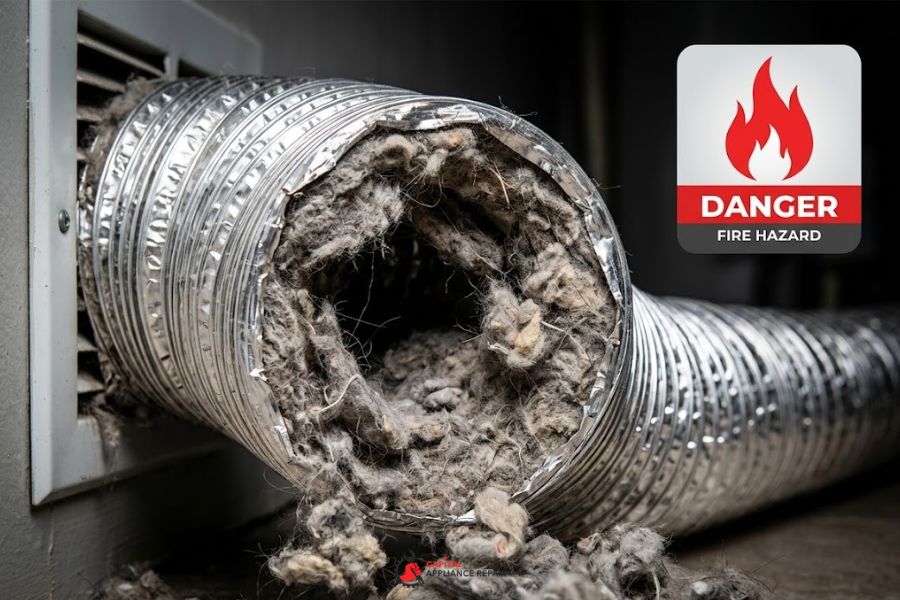
Dealing with massive piles of laundry is a normal part of family life. However, when you have to restart the same load of laundry over and over again, that chore quickly becomes a nightmare. Many homeowners in our region find themselves asking why their appliance is struggling so much. If you are constantly wondering why your clothes dryer take three cycles to dry clothes, you are dealing with a significant mechanical or airflow issue. Running your appliance all day long is incredibly frustrating and drives your monthly electricity bills through the roof.
This problem becomes especially obvious during the slushy Ottawa winter months. Families are constantly washing soaking wet snow pants, heavy parkas, thick wool sweaters, and thermal socks. This heavy, water logged winter gear puts maximum physical strain on your appliance. It requires massive amounts of airflow and sustained heat to evaporate all that trapped moisture. If your unit is struggling, it is time to investigate. The experts at Capital Appliance Repair see these issues every single day. We want to help you understand what is going wrong inside your laundry room. Let us explore the top reasons your heavy loads are coming out damp and what you can do to fix the problem permanently.
The Number One Cause Is A Clogged Dryer Vent
For your appliance to work correctly, it needs to breathe. The drying process is actually quite simple. The machine heats up the air, passes that hot air through your tumbling wet clothes to absorb the moisture, and then exhausts that hot, wet air outside your house. If the appliance cannot push that wet air out through the exhaust vent, the humidity stays trapped inside the spinning drum. Your clothes will simply tumble in a hot, humid sauna and they will never get dry.
Most homeowners diligently clean the small lint filter inside the door before every single load. While this is a great habit, it is not enough to protect the machine. Approximately twenty percent of the fine lint bypasses that screen. Over months and years, this lint builds up inside the flexible exhaust hose behind the machine and deep within the exterior wall vent. This thick buildup severely restricts the required airflow.
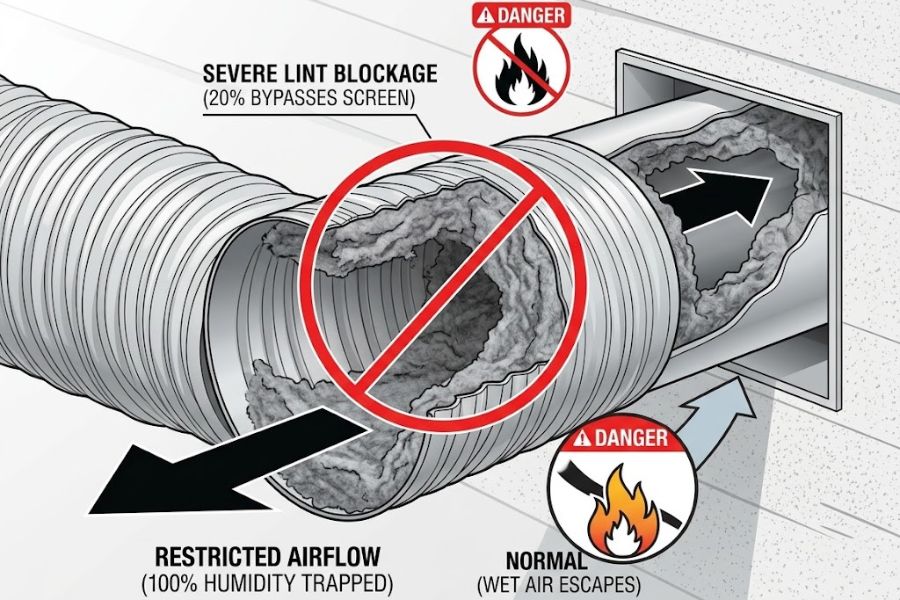
A blocked exhaust hose is more than just an inconvenience. It is a severe fire hazard. Highly flammable lint combined with restricted, overheating airflow is a leading cause of residential house fires. Organizations like Fire Prevention Canada strongly advise homeowners to have their complete exhaust systems professionally cleaned and inspected regularly. This is especially true for homes with long, twisting vent runs hidden inside ceilings or walls.
Warning Signs Your Exhaust Hose Is Blocked
- The top of the metal cabinet feels extremely hot to the touch while running.
- Your laundry room becomes incredibly humid and warm when the machine is on.
- The flapper valve on the outside of your house barely opens when the unit is running.
- You notice a subtle burning smell coming from the back of the appliance.
- Thick heavy items like towels and jeans take hours to feel completely dry.
Differences Between Lint Trap And Wall Vent Blockages
| Location Of Blockage | How It Affects The Machine | How To Fix The Issue |
|---|---|---|
| Internal Door Screen | Reduces immediate airflow into the drum | Wipe clean before every single load |
| Flexible Transition Hose | Traps hot air directly behind the unit | Disconnect and vacuum out the foil tubing |
| Exterior Wall Duct | Creates severe back pressure and fire risk | Hire a professional duct cleaning service |
How Does A Blocked Vent Increase Your Hydro Bill
Running your appliance during Ottawa peak hydro hours is already expensive. When your vent is blocked, the machine has to work three times as long to evaporate the moisture. This constant running draws massive amounts of electricity. Furthermore, many laundry rooms are located in cold, unheated basements. If the hot, moist air cannot escape quickly through the blocked vent, the freezing ambient basement temperatures will cause that moisture to condense back into liquid water inside the hose. This creates a wet, sludgy blockage that completely ruins your energy efficiency.
A Burnt Out Heating Element Or Blown Thermal Fuse
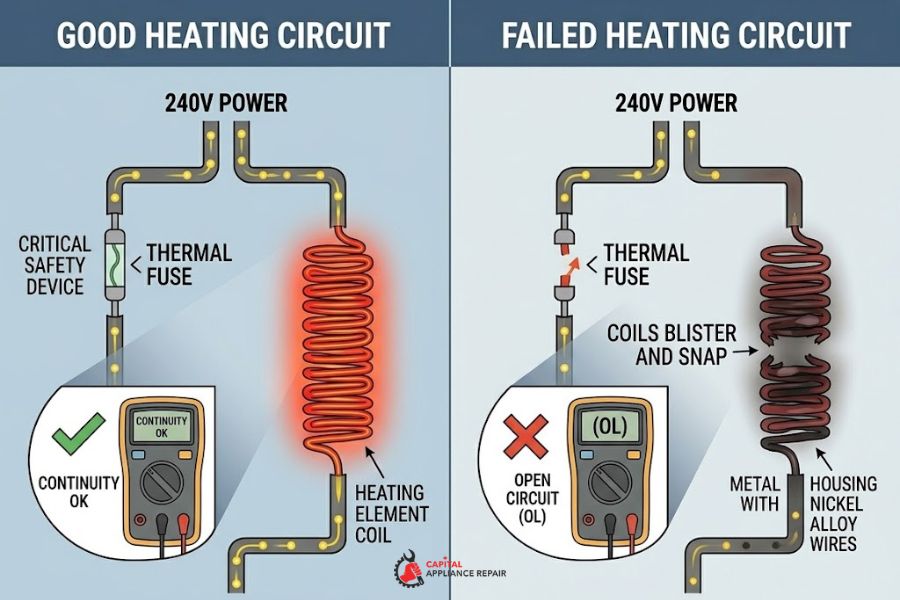
If you have completely cleared your exhaust vent but your clothes are still coming out soaking wet, you likely have an electrical failure. The most common culprit is a blown thermal fuse. This small, inexpensive part is a critical safety device installed on the blower housing. When a clogged vent causes the internal cabinet temperature to spike to dangerous levels, the thermal fuse intentionally trips to prevent a massive fire.
Once this safety fuse blows, it completely cuts power to the heating element. The drum will continue to tumble your clothes, but the air blowing inside will remain freezing cold. This safety mechanism is exactly why so many homeowners ask why their machine is turning but not actually drying anything. A fuse has tripped to prevent a fire. You need appliance repair Ottawa experts to test the electrical continuity of these internal safety switches.
If the fuse is perfectly fine, the main heating element itself might be destroyed. The element is essentially a metal housing filled with coiled nickel alloy wires. When the unit restricts airflow, these coils overheat, blister, and eventually snap in half. Once the coil breaks, the electrical circuit is dead, and the machine can no longer produce heat. Replacing this element requires opening the cabinet and working with 240 volt electrical systems, which should always be handled by trained professionals.
Symptoms Of A Tripped Safety Fuse Or Burnt Element
- The drum spins normally but the air inside feels like room temperature.
- You recently cleared a massive lint blockage but the unit still will not heat up.
- The machine shuts off completely after only three or four minutes of running.
- You heard a distinct popping noise from the back panel during the last load.
- The timer counts down normally but the heavy towels remain completely wet.
Common Electrical Heating Failures Explained
| Failed Component | Reason For The Failure | How A Technician Fixes It |
|---|---|---|
| Thermal Fuse | Overheating due to poor exhaust airflow | Test with a multimeter and replace the fuse |
| Heating Element | Coils blister and snap from excessive heat | Install a brand new OEM element housing |
| High Limit Thermostat | Stuck in the open position due to wear | Swap the thermostat to restore temperature control |
Why Is My Dryer Spinning But Not Heating
If you are wondering why is my dryer spinning but not heating, the answer almost always points to the thermal fuse or the heating element. The motor that turns the heavy drum operates on a completely different electrical circuit than the component that produces the heat. Therefore, the motor will happily continue to tumble your wet laundry all day long, completely unaware that the heating coils have been shut down by a safety switch.
Moisture Sensor Issues On Modern LG Dryers
Sometimes the appliance produces plenty of heat and has perfect airflow, but it still refuses to finish the job. If your machine shuts off after only ten or fifteen minutes, leaving the clothes slightly damp, you likely have a sensor issue. Modern appliances feature two curved metal sensor bars located inside the drum, usually right below the lint filter housing. These sensors use electrical resistance to detect moisture levels in the tumbling clothes.
Wet clothes easily conduct electricity. When wet fabric brushes against these metal bars, it completes a small electrical circuit, telling the main control board that the load needs more time. As the clothes dry, they lose their conductivity. When dry clothes hit the bars, the circuit is broken, and the control board shuts the machine off to save energy. However, this brilliant system has a major weakness.
The waxy chemical residue from popular fabric softener sheets coats these metal sensor bars over time. This invisible layer of wax acts as a perfect electrical insulator. It completely blocks the moisture reading. The control board thinks the heavy winter clothes are perfectly dry because the sensors cannot feel the wetness through the wax buildup. The machine shuts off prematurely every single time. If you need LG dryer repair or assistance with a high-tech sensor system, our experts can accurately diagnose the control board. We also routinely perform Samsung repairs for similar sensor-related shutdown issues.

Symptoms Of Dirty Or Failing Moisture Sensors
- The automatic cycle ends in less than fifteen minutes regardless of load size.
- The clothes feel hot but remain incredibly damp to the touch.
- The timed dry setting works perfectly fine but the automatic setting fails completely.
- You can visually see a dull film on the two metal bars near the lint trap.
- The digital display throws an error code related to the thermistor or moisture circuit.
Sensor Cleaning Versus Component Replacement
| Solution Type | When To Apply This Fix | Expected Result |
|---|---|---|
| Rubbing Alcohol Wipe | When you use dryer sheets frequently | Removes wax and restores accurate moisture readings |
| Wiring Harness Fix | When cleaning the bars does not solve the problem | Reconnects the sensor to the main control board |
| Control Board Swap | When the brain of the appliance is fried | Restores all automatic functions and timing cycles |
Can Fabric Softener Damage Your Appliance
Yes, liquid fabric softeners and waxy dryer sheets are notorious for causing appliance problems. Not only do they coat and ruin moisture sensors, but they also leave a sticky residue on the lint trap screen. This sticky film traps tiny lint particles, creating a solid wall that blocks airflow. This same sticky residue causes issues in other laundry machines, frequently leading to service calls for washing machine repair in Ottawa to clear out clogged drain pumps.
Stop Wasting Hydro And Book A Repair
Ignoring a struggling appliance will only lead to bigger mechanical failures down the road. Heavy, wet winter gear puts maximum physical strain on the drive belt, the drum support rollers, and the main drive motor. If your machine is forced to tumble soaking wet clothes for three hours straight because it has no heat, those moving parts will eventually snap or burn out completely. A simple fuse replacement is much cheaper than buying a brand new drive motor.
You do not have to live with damp clothes and skyrocketing electricity bills. Our dedicated appliance service team is ready to help you restore your laundry room to peak efficiency. We carry fully stocked service vehicles loaded with OEM thermal fuses, heating elements, and sensors for all major brands. Whether you need a dryer repair technician to test your heating circuit, or you are looking for Whirlpool appliance repair experts, we have the skills required.


